


How Can We Be So Connected and So Lonely?
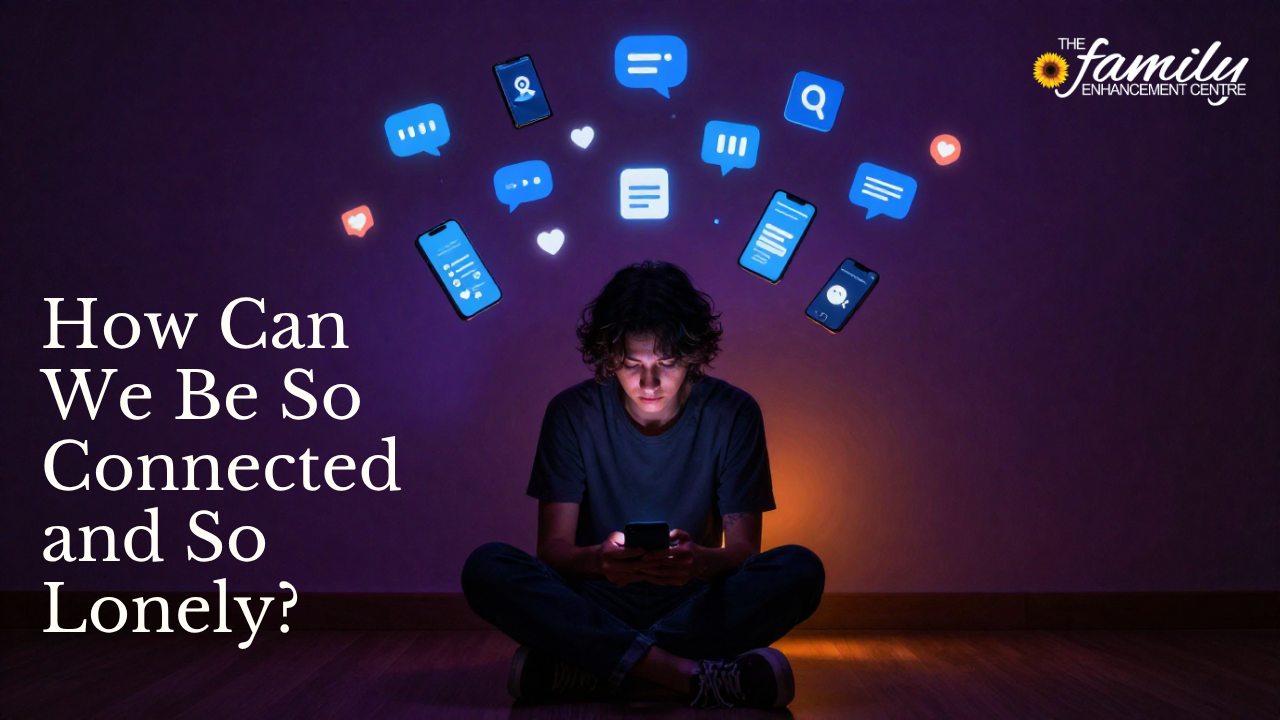
In an age where a message can travel across the world in seconds and social media keeps us constantly plugged into the lives of others, loneliness has become one of the most surprising, and troubling, mental health challenges of our time.
At first glance, it seems like a contradiction. How can people feel lonely when they are more connected than ever? Yet this paradox sits at the heart of a growing global conversation.
The reason is simple: loneliness is not just about being alone.
It is about the absence of meaningful connection. A person can spend their day surrounded by coworkers, exchange messages with friends, attend social events, and maintain an active online presence, yet still feel profoundly disconnected. Loneliness is less about the number of people in our lives and more about whether we feel truly seen, understood, and valued by them.
Research increasingly confirms what many therapists have observed for years. In 2023, the U.S. Surgeon General issued an advisory describing loneliness as a public health epidemic, citing evidence that chronic social disconnection can carry health risks comparable to smoking up to 15 cigarettes a day!
What makes this issue particularly fascinating is that it has emerged during a period of unprecedented technological connectivity. We can communicate instantly, maintain relationships across continents, and access endless opportunities for interaction. Yet many people report feeling less connected than previous generations. According to a Meta-Gallup global survey, nearly one in four adults worldwide reports feeling very or fairly lonely. Younger adults, despite being among the most digitally connected groups, often report some of the highest levels of loneliness.
Several factors are fueling this growing conversation:
- The rise of chronic loneliness across all age groups
- Feeling disconnected despite constant digital communication
- Friendship loss and shrinking social circles in adulthood
- The importance of community, belonging, and social support
- The impact of remote work and fewer face-to-face interactions
- The connection between loneliness, anxiety, and depression
Perhaps the most striking aspect of loneliness is how invisible it can be.
The stereotype of a lonely person often involves someone isolated and withdrawn. In reality, many people experiencing loneliness may appear successful, socially active, and highly engaged. They may have busy calendars, thriving careers, and large networks of acquaintances. Yet beneath the surface, they may struggle with a lack of emotional intimacy, authentic relationships, or a genuine sense of belonging.
This is why loneliness can be so difficult to recognize. Not only in others, but in ourselves.
And loneliness is not confined to any one stage of life.
Young adults may grapple with social transitions, identity formation, and the pressure to build meaningful relationships. Midlife adults often experience friendship shifts due to career demands, parenting responsibilities, or relocation. Older adults may face isolation following retirement, health challenges, or the loss of loved ones. While the circumstances differ, the underlying need remains the same: the desire to feel connected.
The good news is that research consistently shows the powerful role human connection plays in protecting mental health. Strong relationships are associated with lower rates of depression and anxiety, greater resilience during stressful periods, and higher overall life satisfaction. Community acts as a buffer against life's inevitable challenges, helping people navigate uncertainty, loss, and change with greater emotional strength.
How to Combat Loneliness in the Age of Social Media
While social media can help us stay informed and connected, it can also create the illusion of connection without always providing the depth of relationship we need. Scrolling through updates, liking posts, and exchanging quick messages can be enjoyable, but meaningful connection often requires something more intentional.
One of the most effective ways to combat loneliness is to focus on quality over quantity. A few genuine relationships where you feel comfortable being yourself are often more protective for mental health than hundreds of online connections.
Building community doesn't have to be complicated. In fact, some of the strongest connections are formed through simple, shared experiences. Consider:
- Joining a recreational sports league or fitness class
- Attending local community events, festivals, or markets
- Participating in a book club or hobby group
- Volunteering for a cause you care about
- Taking a class to learn a new skill
- Starting a monthly game night with friends or neighbors
- Joining a walking, hiking, or cycling group
- Becoming involved in a local community garden
- Attending networking events or professional meetups
- Inviting someone for coffee instead of relying solely on text messages
It can also be helpful to create small rituals of connection. Regular phone calls with family members, weekly lunches with coworkers, or recurring meetups with friends can provide a sense of consistency and belonging that many people crave.
Most importantly, remember that building community takes time. Meaningful relationships are rarely formed overnight. They grow through repeated interactions, shared experiences, vulnerability, and mutual support. Invest time in others, and watch a stronger community grow